Download The Intelligent Gardener: Growing Nutrient Dense Food
Download The Intelligent Gardener: Growing Nutrient Dense Food
When featuring The Intelligent Gardener: Growing Nutrient Dense Food, we feel really sure that this book can be a good product to read. Reviewing will be so pleasurable when you like guide. The subject as well as exactly how the book exists will certainly affect how someone likes finding out more and extra. This publication has that part to earn many individuals fall in love. Even you have couple of mins to spend on a daily basis to read, you can truly take it as advantages.
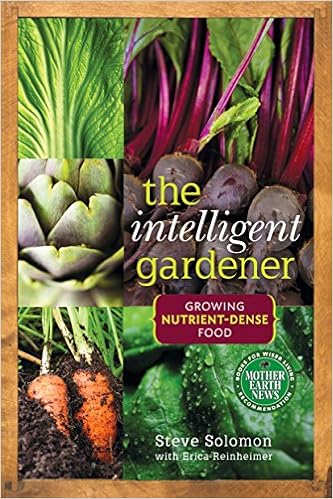
The Intelligent Gardener: Growing Nutrient Dense Food

Download The Intelligent Gardener: Growing Nutrient Dense Food
The Intelligent Gardener: Growing Nutrient Dense Food. Give us 5 mins and we will reveal you the best book to review today. This is it, the The Intelligent Gardener: Growing Nutrient Dense Food that will be your ideal selection for far better reading book. Your 5 times will not invest squandered by reading this site. You can take the book as a resource to make much better concept. Referring the books The Intelligent Gardener: Growing Nutrient Dense Food that can be positioned with your requirements is at some time challenging. However here, this is so easy. You could find the most effective thing of book The Intelligent Gardener: Growing Nutrient Dense Food that you could review.
Well, exactly what regarding you that never ever read this type of book? This is your time to start knowing and also reading this sort of publication category. Never ever uncertainty of the The Intelligent Gardener: Growing Nutrient Dense Food that we present. It will bring you to the actually new life. Also it doesn't suggest to the actual brand-new life, we make certain that your life will be better. You will certainly additionally find the new points that you never ever get from the other resources.
Checking out will not make you constantly imaging and fantasizing about something. It should be the fashion that will order you to really feel so wise as well as clever to undergo this life. Also reading may be dull, it will certainly depend on guide kind. You can choose The Intelligent Gardener: Growing Nutrient Dense Food that will not make you feel bored. Yeah, this is not kin of entertaining publication or spoof book. This is a publication in which each word will provide you deep significance, however easy and simple uttered.
Including some experiences to find the great publication will certainly not make you stopped working in selecting other publication to review. As this publication, you may not be sorry for and also really feel uncertainty to choose it as your reading material. This The Intelligent Gardener: Growing Nutrient Dense Food has shown that it has good material, good outcome, great chance, and also good condition. The writer has actually created this publication with very outstanding product to review by everybody. This is what makes individuals prepare to read this book.
Review
"This practical step-by-step guide shows all is not lost as Steve Solomon shows us the link between healthy soil, healthy food and healthy people." - Sandra Barrera, "The Daily Breeze" "If you garden, no matter if you re an omnivore, vegetarian, or carnivore I think this book is a good read.," blogger, Throwback at Trapp Creek "The nutrient density of the crops we grow and the remineralization of our soils have been almost constantly on our minds and usually on the tips of our tongues. Our biggest inspiration has come from reading Steve Solomen s new book "The Intelligent Gardener. - Shannon Jones and Bryan Dyck, bloggers, Broadfork Farm "Any agriculture or home gardening library will find this an accesible, popular lend." James Cox, "Midwest Book Review" "This practical step-by-step guide shows all is not lost as Steve Solomon shows us the link between healthy soil, healthy food and healthy people. - Sandra Barrera, The Daily Breeze If you garden, no matter if you're an omnivore, vegetarian, or carnivore I think this book is a good read., blogger, Throwback at Trapp Creek The nutrient density of the crops we grow and the remineralization of our soils have been almost constantly on our minds and usually on the tips of our tongues. Our biggest inspiration has come from reading Steve Solomen's new book The Intelligent Gardener. - Shannon Jones and Bryan Dyck, bloggers, Broadfork Farm Any agriculture or home gardening library will find this an accesible, popular lend. James Cox, Midwest Book Review This practical step-by-step guide shows all is not lost as Steve Solomon shows us the link between healthy soil, healthy food and healthy people. - Sandra Barrera, The Daily Breeze If you garden, no matter if you're an omnivore, vegetarian, or carnivore I think this book is a good read., blogger, Throwback at Trapp Creek The nutrient density of the crops we grow and the remineralization of our soils have been almost constantly on our minds and usually on the tips of our tongues. Our biggest inspiration has come from reading Steve Solomen's new book The Intelligent Gardener. - Shannon Jones and Bryan Dyck, bloggers, Broadfork Farm Any agriculture or home gardening library will find this an accesible, popular lend. James Cox, Midwest Book Review
Read more
Review
"A new book from Steve Solomon is reason for excitement in itself. With The Intelligent Gardener, he has re-thought one of the most basic aspects of gardening - basic soil chemistry - and generously supplied us with sensible, practical methods to increase the nutrient density of the food we grow. This book forces serious growers to reconsider some fundamental gardening principles, and to question much of the accepted wisdom on the subject. It's hard to imagine this book not having a significant and lasting impact on the way organic farmers and gardeners grow their crops."— Mark McDonald, West Coast Seeds"The true test of any gardening book is whether it inspires the grower to new action. The Intelligent Gardener indeed inspires me to action, to test my soils more thoroughly, to re-examine my assumptions on compost management and to seek to improve the nutritional value of our produce with a better understanding of our farm's soil. Steve Solomon draws on his years of experience and research to challenge our assumptions of what is good organic soil management and to share his insights for growing the highest quality, nutrient dense food. We are what we eat, and our food is only as healthful as the soil we grow it in. The Intelligent Gardener is a valuable tool for anyone seeking to get the highest food value from their garden."—Darrell Frey, author of Bioshelter Market Garden"The Intelligent Gardener is more than just "intelligent", it is bold, it is courageous, and it challenges many of our preconceptions about food, about soils, about farming, and about health. The storytelling is excellent, the science based on experience rather than some out of context lab experiment, the advice and application easy to follow. Everyone should read this, not just gardeners, as it reminds us of where we came from, where we need to go, and provides some clear direction for getting there. "—Michael Ableman is a farmer, author of From The Good Earth, On Good Land, and Fields of Plenty. "Gardeners in temperate climates should be very grateful to Steve Solomon for addressing the issues of soil testing for fertility in such an engaging and clear way. I look forward to spending time working with the technical methodology."—Binda Colebrook, Horticulturist and author of Winter Gardening in the Maritime Northwest
Read more
See all Editorial Reviews
Product details
Paperback: 336 pages
Publisher: New Society Publishers; 1 edition (December 25, 2012)
Language: English
ISBN-10: 0865717184
ISBN-13: 978-0865717183
Product Dimensions:
6 x 1 x 9 inches
Shipping Weight: 1.2 pounds (View shipping rates and policies)
Average Customer Review:
4.4 out of 5 stars
118 customer reviews
Amazon Best Sellers Rank:
#80,209 in Books (See Top 100 in Books)
Near the end of his new book, The Intelligent Gardener, long-time garden guru Steve Solomon makes a significant point: "There is no place on this planet that remains free of toxic residues." He then suggests we would be far better off if we quit worrying so much about toxicity and, instead, concentrated on growing and eating nutrient dense food.I've been able to follow, and participate to a degree, in Mr. Solomon's metamorphosis from expert "organic" gardener to expert "nutrient dense" gardener. Solomon, in my opinion, has long been ahead of the pack as evidenced by his books "Growing Vegetables West of the Cascades" and "Gardening When It Counts." Through his early gardening experiences and from starting the Territorial Seed business he devised his Complete Organic Fertilizer (COF) which was an attempt to balance garden soil. COF is still a good way to go for people who don't wish to go any farther and the formula is easily found on the internet. (Also in The Intelligent Gardener pps. 84-85).In the last half dozen years through association with Michael Astera's Nutrient Dense Project and a re-study of the work of scientists like William Albrecht and Victor Tiedjens, Steve Solomon has become a convert to the concept of "nutrient dense."The concept of nutrient dense food is pretty simple. The gardener works over time to balance the soil with the proper mix of minerals. The result will be soil that encourages the life forms (worms, bacteria, etc.) that help with soil symbiosis and soil that provides the nutrients plants need to grow properly. Balanced soil will mean healthier plants, resistant to pests. Balanced soil will result in food that is nutrient dense, providing us with the vitamins and minerals we need to be healthy.Steve Solomon spends a lot of time debunking the concept promoted by J.I. Rodale that compost would solve all problems and that by continuing to heap organic matter on a garden a garden would only get better and better. This is not the case as Solomon explains in detail in a chapter titled: SAMOA (The S*** Method of Agriculture). More important is bringing calcium and magnesium into proper balance. When garden soil is properly balanced, according to Solomon, the garden will create its own nitrates.Balancing calcium, magnesium, potassium, sulphur, sodium and other minerals is the key to nutrient dense food. Getting this balance correct begins with a $20 soil test. Then, with a copy of The Intelligent Gardener in hand, one can use the worksheets provided to come up with a prescription for a custom fertilizer designed for one's own garden. Solomon's colleague and co-author, California gardener Erica Reinheimer has developed a website where you can find copies of the worksheets found in Steve's book. On this same website you will find a link to "OrganiCalc" which allows you, for a small fee, to compute your custom fertilizer prescription on line.
So, whenever I'm thinking of buying a book, I read the negative reviews first. They are much more revealing than the positive ones--frequently they are revealing not so much of the book's quality or content as they are of the assumptions readers bring. And so it seems to be with Solomon's books. I know this review is kind of long--the next paragraph plus the last one are my quickie summary review; if you want more specifics read the 3rd paragraph too.If I could give half-stars, I'd give this 3.5. The information is useful (albeit really dense in places...but we're talking about soil amendment recipes here, so, you know) but it's not entirely practical especially if you're low on capital at the outset. What specifically was useful? Solomon's basic argument is that plants contain nutrients derived from the soil, ergo if the soil is low in nutrients so are your vegetables. Plants are more than N, P, and K. They may look ok, you may even have good yields, but wit modern soils they are not as nutritious as they should be. Now this may not be an earth-shattering revelation (although many reviewers are surprisingly resistant to the concept...see below), but Solomon couples it with some suggestions on how to test your soil nutrient levels, how to improve them (this is where the big expense may come in, depending on your situation), and also challenges gardening orthodoxy that suggests that veggies will be nutritionally perfect as long as they're organic. The reason I deducted 1.5 stars is that after reading the book one may not be in a position to apply what they learned; which maybe is not the author's fault, but it could arguably have been addressed in the book...perhaps a chapter on "What to do if you can't access such-and-such or can't afford to shell out hundreds of dollars on amendments or can't wait three years to build your soil."Apparently gardening is a topic like health and diet in that everybody seems to think theirs is the Only Right Way to Do It. (This goes for Solomon too, although I think he's mostly right.) The #1 thing that strikes me about the negative reviews on Solomon is that people base their ideas on a very faulty understanding of the history of agriculture. I keep seeing the claim that people have been gardening for millennia and doing just fine without adding the amendments Solomon recommends (see reviews on Gardening When It Counts for more of the same), but this is simply not true. It is because of the bad methods used in the past that we are now reaping the whirlwind of nutrient-depleted soil. People have always done the best they could, but for most of history humans have not known about things like microscopic organisms in the soil or mycorrhizae, etc. "Put poop on it and keep digging until nothing grows there anymore" was basically the rule, until it was replaced in the 20th century by "put chemicals on it and keep digging until nothing grows there anymore." Analysis of skeletal remains shows that compared to ancient hunter-gatherers, agriculture resulted in people with rotten crooked teeth, stunted growth, crippling arthritis, and yes, major nutrient deficiencies. Remember rickets and scurvy? They still exist, you know. THIS HAS BEEN TRUE SINCE THE INCEPTION OF AGRICULTURE 10,000+ YEARS AGO AND IS STILL TRUE TODAY. Just because we're accustomed to it doesn't mean it's "natural" let alone optimal. Gardening and agriculture should never be compared to "nature" because they are examples of human INTERFERENCE with natural processes for our own ends. (This doesn't mean they are necessarily bad--but we need to be realistic.) Meanwhile, I also see many reviews saying Solomon's method is wrong because so-and-so does something different and their plants produce just fine--but unless they are doing a chemical analysis of the nutrient levels in their food, they can't compare their results to Solomon's, because he's not talking about yield, but nutritional content. It's comparing apples to oranges (har har).Conclusion: I'm a pretty inexperienced gardener. I haven't been able to apply all of Solomon's recommendations. But I accept his basic premises based on my very rudimentary knowledge of botany and my somewhat less rudimentary knowledge of history. if you accept the abundant scientific data, archaeological remains, and historical records that show our soils are badly eroded and depleted of nutrients; if you accept that plants get their nutrients from that soil and therefore soil chemistry is the limiting factor in how nutritious your plants can be; if you want your veggies to be as nutritious as possible; and if you are willing to read a book that is dense and has formulae and stuff, then you'll benefit from this one. If on the other hand you are already convinced your way of gardening is the Right Way, why are you even buying books on the subject? Just go do your thing.
If you garden organically in the hope of improving your health, this book could provide a major missing link. For many years we had been advised to add compost and manure--if that did not work, just add more. In some areas where we lived, that seemed good enough. Now in retirement, with years of gardening experience but with depleted sandy soil, it seemed that nothing worked. A soil test from an area university revealed that our soil was deficient in most nutrients but too high in others. The advice was to add organic amendments. Period.After a quick initial reading of the book, I am optimistic that I will be able to balance my minerals and improve tilth in the process, by one of several options described. I should be able to calculate it myself after a particular soil test, without a degree in chemistry and higher math, or I can take an easier route and submit a sample to a lab, then get an online interpretation of what is needed--for a total of about $30. There is even a recipe for a "best guess" fertilizer, based on what most vegetables might need, for those who only have a few plants and can't afford to test.The most important point I have learned so far is that balancing the minerals in the soil can boost the micro-life, improve the holding capacity of moisture and nutrients and provide food for maximum nutritional value and taste.You can get recommendations for best local varieties and planting dates from a local extension service, but this book provides home gardeners with much information that was not readily available earlier.
The Intelligent Gardener: Growing Nutrient Dense Food PDF
The Intelligent Gardener: Growing Nutrient Dense Food EPub
The Intelligent Gardener: Growing Nutrient Dense Food Doc
The Intelligent Gardener: Growing Nutrient Dense Food iBooks
The Intelligent Gardener: Growing Nutrient Dense Food rtf
The Intelligent Gardener: Growing Nutrient Dense Food Mobipocket
The Intelligent Gardener: Growing Nutrient Dense Food Kindle
The Intelligent Gardener: Growing Nutrient Dense Food PDF
The Intelligent Gardener: Growing Nutrient Dense Food PDF
The Intelligent Gardener: Growing Nutrient Dense Food PDF
The Intelligent Gardener: Growing Nutrient Dense Food PDF


0 komentar: